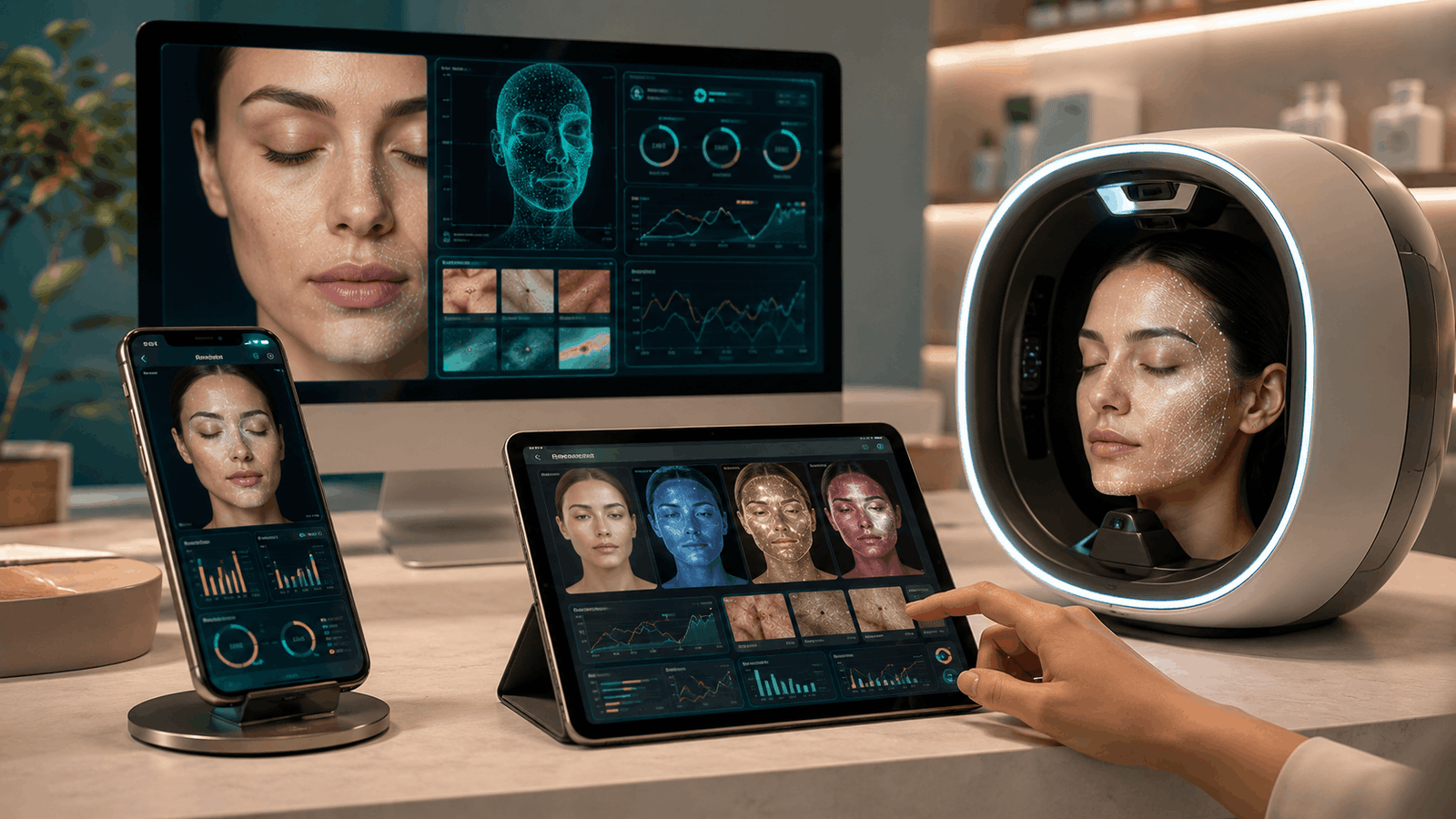
Skincare today is no longer based on guesswork or occasional mirror checks. With advances in technology, smart skin tracking has made it possible to understand your skin in real time with far greater accuracy. From hydration levels to early signs of ageing, AI can now detect changes that are often invisible to the human eye.Â
At Sarivaa Aesthetics, smart skin tracking is used to turn everyday skincare into a data-driven process that evolves with your skin’s needs. Instead of relying on trial and error, people can now see exactly how their skin is responding to products, treatments, and environmental changes.Â
This shift is powered by AI skin analysis, imaging systems, and continuous monitoring tools that bring clinical-level insight into everyday skincare routines.
What Is Smart Skin Tracking?
Smart skin tracking is a technology-driven method of monitoring skin conditions over time using artificial intelligence and digital imaging tools. It evaluates changes in hydration, texture, pigmentation, elasticity, and sensitivity through continuous data collection.
Unlike traditional skincare routines, smart skin tracking focuses on measurable progress. This makes it easier to understand what is actually working and what needs adjustment.
- The global AI skincare market is expected to grow by over 20% annually by 2030 (Grand View Research)Â
How AI Skin Tracking Apps Work
An AI skin tracking app uses facial recognition and machine learning to analyse selfies or scanned images. It breaks the skin into data points and tracks changes over time.
These apps typically measure:
- Skin hydration levels
- Texture smoothness
- Redness or irritation
- Pigmentation changes
- Early signs of ageing
This is part of modern skin progress technology, helping users understand how their skin reacts to products, lifestyle, and environment.
Digital Skincare Monitoring in Clinics
Clinics use digital skincare monitoring systems to track treatment outcomes more precisely. Instead of relying only on visual checks, they use advanced imaging and AI comparison tools.
- Dermatology clinics using AI imaging report up to 30–40% improvement in treatment accuracyÂ
How clinics track treatment results:
- High-resolution facial imaging before and after treatments
- 3D facial scanning for structural changes
- AI-based skin comparison reports
- Progress tracking across multiple sessions
This answers a common question: how clinics track treatment results with accuracy and consistency.
Can AI Really Monitor Skin Progress?
Yes, smart skin tracking powered by AI can monitor skin progress effectively when used consistently. It is trained on large datasets of skin types and conditions, allowing it to detect subtle changes that are often missed by the human eye.
So when people ask, ” Can AI monitor skin progress?”, the answer is yes, especially when combined with regular imaging and tracking data.

Try Smart Skin Tracking at Sarivaa Aesthetics
Get a personalised skin analysis using advanced AI-based tracking and see real changes in your skin over time.
How to Track Skincare Results Properly
Understanding how to track skincare results is key to improving your routine. Many people rely only on memory or mirror checks, which are not always accurate.
Better ways include:
- Taking consistent lighting selfies weekly
- Using an AI skin tracking app
- Logging skincare product usage
- Comparing monthly progress reports
- Tracking hydration and texture changes
This is where a skincare progress tracker becomes extremely useful, turning skincare into a measurable process.
Best Skin Tracking Apps and Technology

There are now several reliable apps that support smart skin tracking and personalised skincare monitoring. Below are some of the most widely used options:
Popular AI Skin Tracking Apps
| App Name | Key Features | Best For |
| YouCam Makeup | AI skin analysis, progress tracking, beauty simulation | Beginners & general users |
| Skin Bliss | Ingredient matching, routine tracking, skin insights | Product-focused skincare users |
| Troveskin | Skin condition scoring, progress charts, and reminders | Daily skincare tracking |
| SkinVision | Mole and skin spot analysis, risk detection | Medical-style monitoring |
| Miiskin | Dermatology-grade skin tracking, photo comparisons | Long-term condition tracking |
These apps use skin progress technology to help users visually understand improvements over time and adjust routines accordingly.
Not Sure Which Skin Tracking Method Is Right for You?
Speak to a skincare specialist at Sarivaa Aesthetics for personalised advice and treatment recommendations.
Does Skin Tracking Technology Actually Work?
A common question is, does skin tracking technology work in real life? The answer is yes, when used correctly and consistently.
It works best when it:
- Tracks skin changes over time
- Compares images under the same conditions
- Uses AI to detect patterns
- Provides consistent feedback loops
At clinics like Sarivaa Aesthetics, smart skin tracking is integrated into treatment planning to improve accuracy and results.
The Role of AI in Modern Skincare
AI has made smart skin tracking more accessible than ever. Today it is used in:
- Smartphone-based skin analysis apps
- Wearable hydration and UV sensors
- Retail skin diagnostic scanners
- Professional clinic imaging systems
Together, these tools create a complete digital skincare monitoring ecosystem that supports both home users and clinical treatments.
Final Thoughts
Smart skin tracking is making skincare more scientific, transparent, and personalised. With tools like AI-powered apps and clinic-grade imaging systems, users can finally understand what is happening beneath the surface of their skin.
As technology continues to improve, smart skin tracking will play an even bigger role in how treatments are planned, adjusted, and evaluated, making skincare more precise and results-driven than ever before.
FAQs on Smart Skin Tracking
- How often should I use smart skin tracking tools?
Most experts recommend using smart skin tracking tools 1–2 times per week. This is enough to capture meaningful changes without over-analysing short-term fluctuations like daily hydration shifts.
- Can smart skin tracking replace a dermatologist visit?
No, it cannot replace professional diagnosis. Smart skin tracking is useful for monitoring trends and progress, but any concerning skin changes should still be checked by a qualified skincare professional.
- Do lighting conditions affect skin tracking accuracy?
Yes, lighting has a big impact. For best results, scans or selfies should be taken in consistent natural lighting to avoid false readings in texture or tone analysis.
- Is smart skin tracking suitable for sensitive skin types?
Yes, it is suitable for all skin types, including sensitive skin. In fact, it can be especially helpful for tracking flare-ups, irritation patterns, and product reactions over time.
- Can smart skin tracking predict future skin issues?
It cannot predict with certainty, but it can identify early warning patterns. For example, repeated redness or dehydration trends may indicate potential future sensitivity or breakouts.