
How to Choose the Best Skin Tightening Treatment for Your Age
Getting older doesn’t mean you have to accept loose or sagging skin as inevitable. Thanks to advances in aesthetic medicine, finding the best skin tightening treatment is easier than ever. Whether you’re in your 30s looking to prevent early signs of aging or in your 50s hoping to restore firmer skin, choosing the right treatment depends on your skin condition, goals, and lifestyle, not your age alone.
This guide explains how your skin changes over time, compares popular non-surgical options, and helps you understand which treatments may work best at every stage of life.
Why Does Skin Become Less Firm as You Age?
Skin gradually loses its firmness because collagen and elastin production naturally slows over time. These two proteins keep your skin strong, smooth, and elastic.
Most people begin losing collagen in their mid-20s, with production decreasing by about 1% each year. While this change is natural, several lifestyle factors can speed up the aging process.
Common causes of skin laxity include:
- Excessive sun exposure
- Smoking
- Poor skincare habits
- Weight fluctuations
- Environmental pollution
- Genetics
As collagen declines, the skin becomes thinner, less elastic, and more likely to develop fine lines and sagging around the cheeks, jawline, neck, and eyes.
When Should You Consider Skin Tightening Treatments?
There isn’t a perfect age to begin treatment. Instead, the right time depends on when you start noticing changes in your skin.
You may benefit from treatment if you notice:
- Mild skin laxity
- Softer jawline definition
- Loose skin around the neck
- Fine lines are becoming more noticeable
- Reduced skin elasticity
- Loose skin after significant weight loss
Starting treatment earlier often focuses on collagen preservation, while later treatments aim to improve existing skin laxity.
Ready for Tighter, Smoother Skin?
Discover personalised skin tightening treatment options tailored to your unique skin concerns. Our experienced team can help you choose the right solution for natural-looking, long-lasting results.
Which Skin-Tightening Treatment Is Best in Your 30s?
Your 30s are often considered the ideal decade for prevention.
Although collagen production has slowed, your skin still responds extremely well to treatments that stimulate new collagen growth.
Many providers recommend:
- Radiofrequency treatments
- Microneedling with RF
- Light laser rejuvenation
- Medical-grade skincare
At this stage, the goal is to maintain firmness rather than correct severe sagging.
Patients who begin preventative treatments early often require fewer intensive procedures later in life.
What Is the Best Skin Tightening Treatment in Your 40s?
During your 40s, collagen loss becomes more noticeable. The jawline may begin to soften, smile lines deepen, and mild neck laxity can develop.
For many people, this is when the best skin tightening treatment involves technologies that reach deeper layers of the skin.
Treatment goals typically include:
- Improving facial contours
- Tightening mild to moderate sagging
- Stimulating long-term collagen production
- Reducing fine lines
A customised treatment plan may combine more than one technology to maximise results while keeping downtime minimal.
How Do Your Skin Tightening Needs Change in Your 50s and Beyond?
By your 50s and 60s, collagen and elastin loss becomes more significant. The skin may appear thinner, looser, and less resilient.
Although non-surgical treatments cannot replace a surgical facelift, they can still provide noticeable improvements by:
- Increasing skin firmness
- Improving texture
- Enhancing facial definition
- Supporting healthier collagen production
Your provider may recommend a combination of treatments based on your skin quality, desired outcome, and medical history.
Realistic expectations are important, as results vary from person to person.
Ready to Maintain Youthful Skin?
Starting early can help preserve collagen and delay visible signs of aging. A personalised consultation can identify the right treatment plan based on your skin concerns.
Which Non-Surgical Skin Tightening Treatments Are Most Popular?
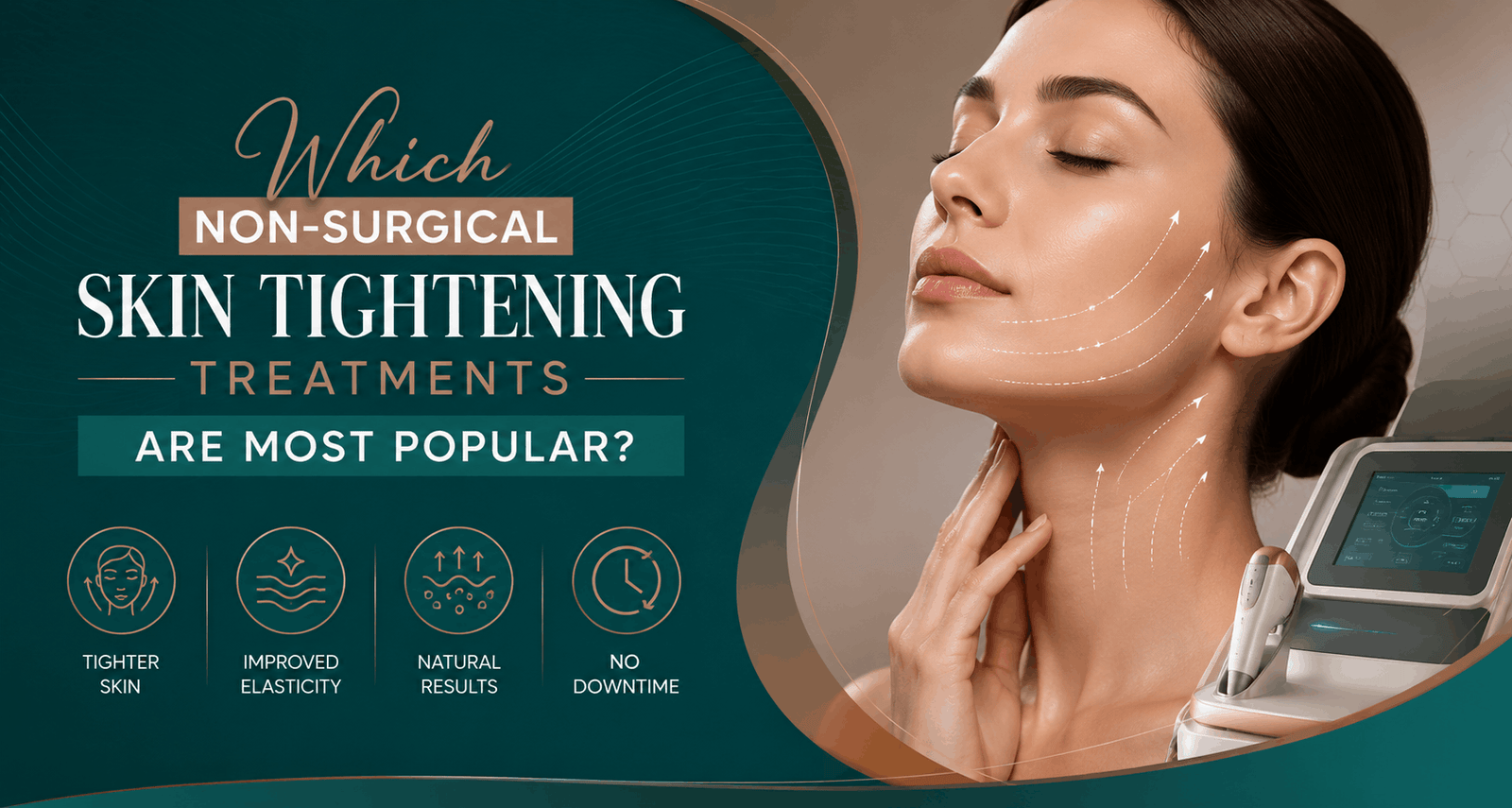
Several technologies are available today, each offering different benefits.
Radiofrequency (RF)
Radiofrequency gently heats the deeper layers of skin to stimulate collagen production. It is commonly used for facial tightening, neck rejuvenation, and improvement of mild skin laxity.
Ultrasound Skin Tightening
Ultrasound technology reaches deeper structural layers beneath the skin to encourage long-term collagen remodeling. It is often recommended for lifting the jawline and tightening the neck.
RF Microneedling
RF Microneedling treatment combines controlled micro-injuries with radiofrequency energy to improve both skin texture and firmness.
It is particularly helpful for:
- Mild acne scars
- Enlarged pores
- Fine lines
- Early skin laxity
Laser Skin Tightening
Laser treatments gently warm the skin to encourage collagen production while improving overall skin tone and texture.
Which Treatment May Suit Your Age?Â
Age Group | Primary Goal | Common Treatment Options |
30s | Prevention and collagen stimulation | RF, Microneedling, Laser |
40s | Improve mild sagging | RF, Ultrasound, Combination therapy |
50s | Restore firmness | RF, Ultrasound, RF Microneedling |
60+ | Improve skin quality | Combination treatments with maintenance |
How Can You Make Skin Tightening Results Last Longer?
While skin tightening treatments stimulate collagen production, maintaining healthy skin habits is essential for preserving your results.
Here are some practical ways to extend the benefits of your treatment:
- Apply broad-spectrum sunscreen every day.
- Follow a consistent skincare routine with clinically proven ingredients.
- Stay hydrated to support overall skin health.
- Eat a balanced diet rich in vitamins and antioxidants.
- Avoid smoking, which accelerates collagen breakdown.
- Schedule maintenance treatments if recommended by your provider.
Because collagen production naturally slows with age, maintenance sessions may help you enjoy firmer-looking skin for longer.
Are Non-Surgical Skin Tightening Treatments Safe?
Yes, non-surgical skin tightening treatments are generally safe when performed by qualified professionals. Mild redness, swelling, or warmth may occur temporarily. A thorough consultation and following aftercare instructions help minimise risks and support safe, effective, natural-looking results.
Conclusion
Choosing the best skin tightening treatment depends on your skin condition, age, and aesthetic goals. Modern non-surgical options can improve firmness, stimulate collagen, and reduce visible signs of aging with minimal downtime. Consulting an experienced provider ensures a personalised treatment plan that delivers safe, natural-looking, and long-lasting results.
FAQs
- What is the best age to start skin tightening treatments?
Most people benefit from starting in their 30s, but treatment depends on individual skin concerns and goals.
- How long do skin-tightening results last?
Results typically last several months to over a year, depending on treatment, lifestyle, and maintenance sessions.
- Can skin tightening replace a facelift?
No, non-surgical treatments improve mild to moderate laxity but cannot match surgical facelift results.
- How many skin-tightening sessions are needed?
Most treatments require one to four sessions, depending on your skin condition and chosen treatment method.
- Is there any downtime after skin tightening treatment?
Most patients resume normal activities immediately, with only temporary redness or mild swelling after treatment.