
How Long Should You Avoid Exercise After Dermal Filler?
Exercise is one of the most common questions people have after filler.
Your practitioner may recommend avoiding vigorous exercise for around 24 to 48 hours, although the advice can vary. Cleveland Clinic notes that some people may be advised to avoid rigorous physical activity for a day or two after dermal filler.
For lip filler specifically, avoid vigorous exercise for several days because it may make swelling and bruising worse.
Therefore, a gentle walk may be acceptable for some people, while an intense workout may need to wait.
If your practitioner gives you a different timeframe, follow their advice. They can take into account the area treated, the amount of filler used, and your personal recovery.
Can You Sleep Normally After Dermal Filler?
In most cases, you can sleep after treatment. However, it may be sensible to avoid putting unnecessary pressure on the treated area during the early recovery period.
For example, if you have had filler around the cheeks or lips, sleeping face-down or pressing your face firmly into a pillow may be uncomfortable.
Your practitioner may suggest sleeping with your head slightly elevated during the first night if swelling is a concern. However, there is no single sleeping position that applies to every filler treatment.
The important point is to avoid deliberately pressing, rubbing, or manipulating the treated area.
Should You Avoid Heat After Dermal Filler?
Excessive heat may make temporary redness and swelling more noticeable. Therefore, many practitioners recommend limiting exposure to very hot environments during the early recovery period.
This may include:
- Saunas
- Steam rooms
- Very hot baths
- Hot tubs
- Intense heat exposure
- Prolonged direct sunlight
The exact timeframe depends on your treatment and practitioner. Rather than following a fixed rule from the internet, ask your practitioner when it is appropriate to return to these activities.
Can You Touch or Massage Dermal Filler?
It is best to avoid unnecessary touching or manipulation.
Although some filler treatments may occasionally require specific massage or adjustment, this should only be done when your practitioner recommends it. Trying to massage a lump or uneven area yourself could irritate the tissue or interfere with the treatment.
So, if something feels unusual, contact your practitioner instead of attempting to correct it yourself.
How Long Does Dermal Filler Take to Settle?
There is no single recovery timeline because different people respond differently to treatment.
A general guide may look like this:
Recovery period | What you may notice |
First 24 hours | Swelling, redness, tenderness or mild bruising |
Days 2–3 | Swelling or bruising may still be noticeable |
Days 4–7 | Early swelling often starts to settle |
1–2 weeks | The treated area may look more settled |
This is only a general guide. The FDA states that common side effects such as swelling and bruising can take days to weeks to resolve.
For that reason, do not judge the final appearance immediately after treatment.
What Can You Do to Support Dermal Filler Recovery?
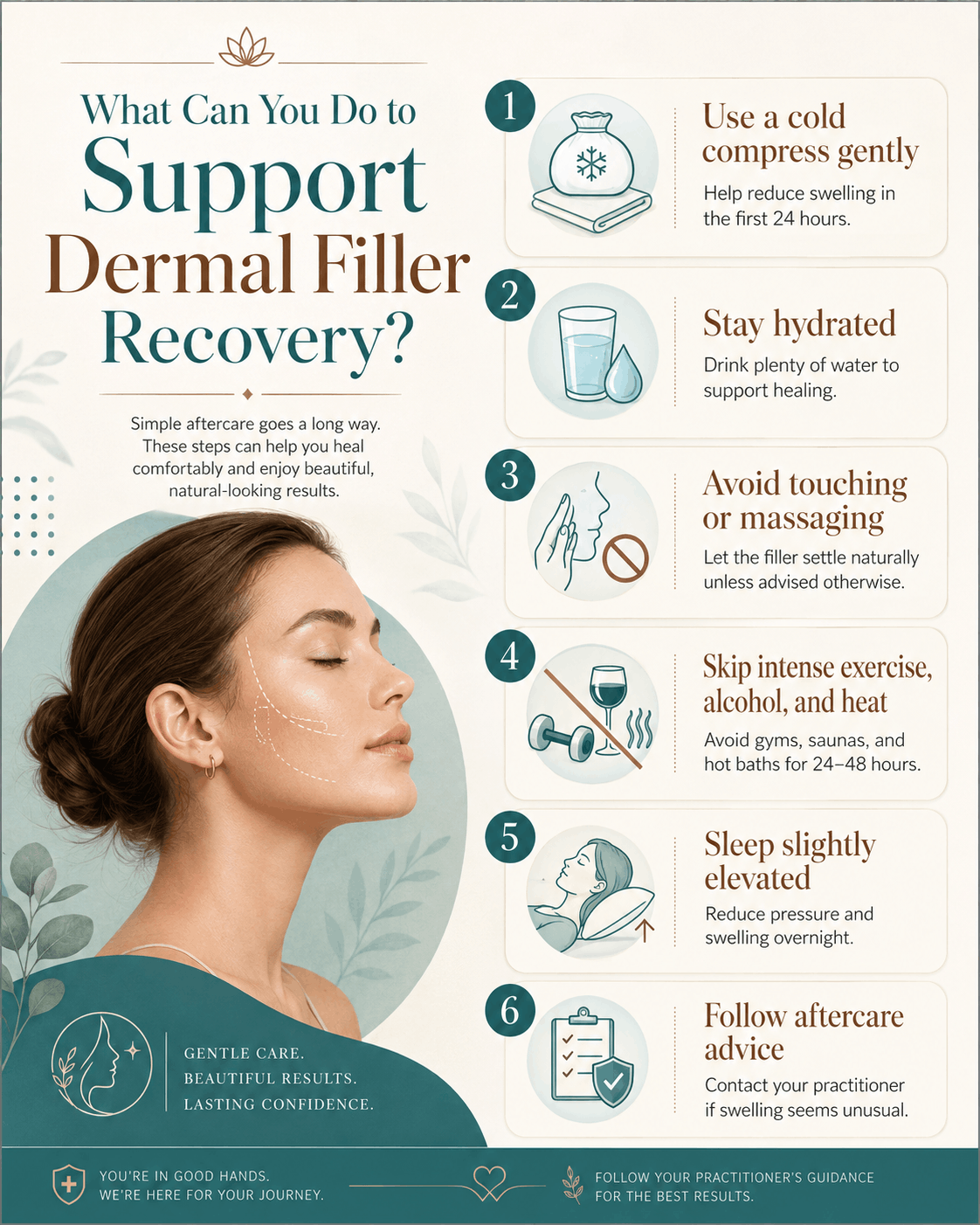
Good dermal filler aftercare is mainly about following personalised advice and giving your body time to recover.
Depending on your practitioner’s instructions, you may be advised to:
- Keep the treated area clean
- Stay hydrated
- Use a cold compress if recommended
- Avoid unnecessary pressure
- Limit strenuous exercise initially
- Avoid excessive heat
- Protect your skin from excessive sun exposure
- Attend a follow-up appointment if recommended
A cold compress can sometimes help with temporary discomfort and swelling, but it should not be applied with heavy pressure.
Most importantly, do not introduce additional treatments simply because you are concerned about early swelling or unevenness. Give the area time to settle and speak to your practitioner first.
What Are Common Side Effects After Dermal Filler?
Some temporary reactions are expected after injectable treatments.
Common dermal filler side effects can include:
- Swelling
- Bruising
- Redness
- Tenderness
- Itching
- Mild pain
- Firmness or small lumps
The FDA lists swelling, bruising, redness, pain, and tenderness among the known risks of dermal fillers.
These reactions do not automatically indicate that something has gone wrong. However, symptoms that are severe, worsening, or unusual should be assessed by a qualified professional.
When Should You Contact Your Practitioner?
Most early reactions gradually improve. However, you should contact your practitioner if you are concerned about your recovery or notice symptoms that do not seem normal.
Seek prompt medical attention if you experience:
- Severe or increasing pain
- Rapidly worsening swelling
- Significant skin colour changes
- Pale, grey or blue skin near the treated area
- Signs of infection
- Vision changes
- Other sudden or unusual symptoms
Therefore, unusual pain or significant colour changes should never be ignored.