
Lip Filler Migration: Causes, Prevention and What to Do

Lip filler can enhance volume and shape, but lip filler migration is one possible complication that people should understand before treatment. It happens when filler moves beyond the area where it was originally placed. 

However, not every case of swelling or fullness above the lip means migration. Early swelling, bruising, and tenderness are common after dermal filler and often settle within days to weeks. The key is knowing what is normal, what may need assessment, and when professional advice is important.

What Is Lip Filler Migration?

Filler migration refers to filler material being found outside its intended treatment area. With lip injections, this may sometimes appear as fullness above the upper lip or a change in the natural border of the lips.

Research describes filler migration as a potential complication of soft-tissue fillers. Several factors may contribute, and the exact cause is not always easy to identify.

It is also important to remember that migration is different from temporary post-treatment swelling. Your lips can look larger, uneven, or slightly puffy immediately after injections, even if the filler hasn’t actually moved.

What Causes Lip Filler Migration?

There is no single cause. Instead, several factors may play a role in how filler behaves within the tissue.

Injection technique and placement

The depth, location, and amount of filler placed can affect the final result. Facial anatomy is also different from person to person. Recent research highlights the importance of understanding lip anatomy and using an individualised approach when planning filler treatment.

Too much filler

Using more filler than the lips can comfortably accommodate may contribute to an overfilled appearance. Repeated treatments without assessing existing filler can also make it harder to judge how much additional product is appropriate.

Individual anatomy

The structure and movement of your lips can influence how filler sits within the tissue. Therefore, the same treatment approach may not produce identical results for two people.

Filler characteristics

Different fillers have different properties. Their composition, concentration and behaviour within tissue can affect how they respond over time. For this reason, the product used should always be discussed during your consultation.

Pressure and aftercare

Your practitioner will normally provide specific aftercare advice. Unnecessary pressure or manipulation should be avoided unless your practitioner specifically recommends it.

How Can You Tell If Lip Filler Has Migrated?
Possible signs can include:

  • Fullness above the natural lip border
  • A visible change in the shape of the upper lip
  • Persistent puffiness after the initial swelling has settled
  • A firm area or lump outside the intended treatment zone
  • An appearance that remains noticeably different from the planned result

However, these signs do not automatically confirm migration. Swelling, bruising, nodules and other reactions can have similar appearances. In some cases, a practitioner may need to examine the area to determine what is happening.

A review of lip filler complications published in 2023 identified migration among the reported complications associated with filler placed in the lips.

Considering Lip Filler Treatment?

Good treatment starts with careful assessment and realistic expectations. Learn more about our Lip Filler Treatment and discuss your goals with a qualified practitioner.

How Is Filler Migration Different From Normal Swelling?

This is one of the most important distinctions to make.

Normal swelling

Possible filler migration

Usually appears soon after treatment

May remain noticeable after initial swelling settles

Can make the lips look temporarily larger

May create persistent fullness outside the lip border

Usually reduces gradually

May remain unchanged or require assessment

Can be uneven during early recovery

May create a lasting change in shape

Often settles without treatment

May need professional management

Swelling and bruising are among the most common short-term reactions following dermal filler. A 2025 meta-analysis of hyaluronic acid lip filler studies reported swelling in 78% of participants, while firmness, bruising, and tenderness were also reported.

Therefore, seeing larger-than-expected lips shortly after treatment does not necessarily mean that filler has migrated.

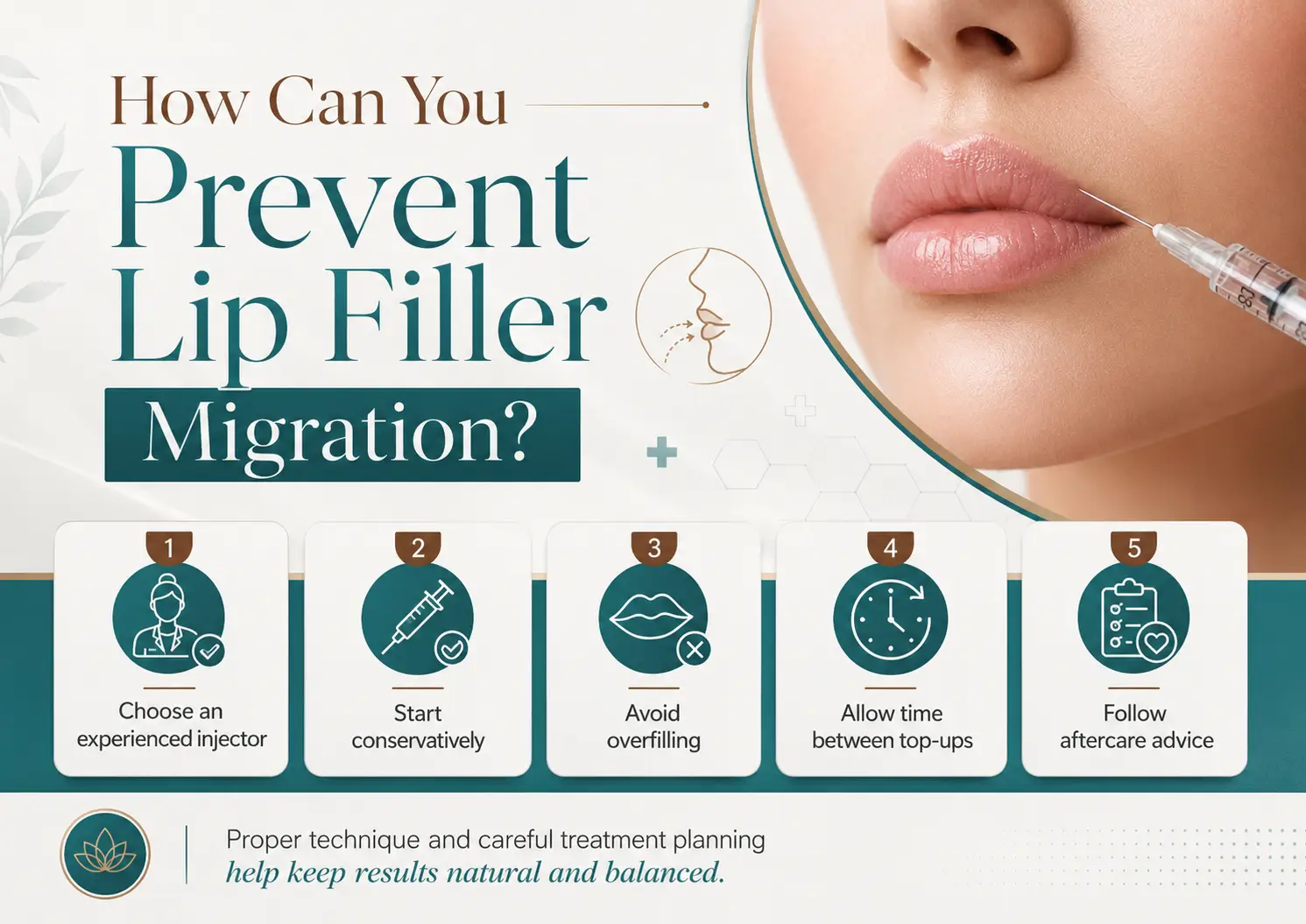
How Can You Prevent Lip Filler Migration?

Although no treatment can guarantee that complications will never occur, careful planning can help reduce avoidable risks.

Start by choosing a practitioner with appropriate training and experience in injectable treatments. During your consultation, ask what product is being used, why it is suitable for you and how much filler is being considered.

It is also helpful to:

  • Discuss previous filler treatments
  • Tell your practitioner about relevant medicines and allergies
  • Avoid requesting excessive volume
  • Allow previous filler to be assessed before adding more
  • Follow personalised aftercare instructions
  • Attend recommended follow-up appointments

Good communication matters too. A skilled practitioner should understand that the goal is not simply to add volume. Lip shape, proportion and your existing facial features should all be considered.

What Should You Do If You Suspect Filler Migration?

If you think your filler has moved, avoid trying to correct the problem yourself.

Do not massage, press, or add more filler to the area unless a qualified practitioner advises you to do so. Instead, contact your practitioner and explain what you have noticed.

An assessment can help distinguish between swelling, a lump, inflammation, overfilling and possible migration. In more complex cases, imaging such as ultrasound may also help identify filler and guide management.

Need Advice About Your Filler?

If you are unsure whether a change is part of normal recovery, contact us for professional guidance and an assessment.

Can Migrated Lip Filler Be Dissolved?

If the filler is made from hyaluronic acid, a practitioner may consider hyaluronidase, an enzyme that can break down hyaluronic acid filler.

However, dissolving filler is not automatically the right solution. First, the cause of the problem should be assessed. The type of filler, amount present, and location all matter.

Research indicates that hyaluronidase can be effective for dissolving hyaluronic acid fillers, although its effectiveness can vary according to the filler and how the treatment is administered.

The FDA also notes that removing dermal filler can involve injections or other interventions and that removal may be difficult, particularly with permanent fillers or materials other than hyaluronic acid.

When Should You Seek Urgent Medical Advice?

Migration is mainly a cosmetic concern, but injectable fillers also carry rare, serious risks that require urgent attention.

Seek immediate medical help if you develop:

  • Severe or increasing pain
  • Sudden skin colour changes
  • Pale, grey or blue skin around the treated area
  • Significant or rapidly worsening swelling
  • Vision changes
  • Other sudden or unusual symptoms

The FDA identifies accidental injection into a blood vessel as the most serious risk associated with dermal fillers. Although uncommon, vascular complications can lead to tissue damage, vision problems, or stroke.

This is why prompt assessment is important when symptoms appear unusual or severe.

Have Questions About Lip Filler?

Your concerns deserve proper assessment rather than guesswork. Call us now to discuss your symptoms or arrange a consultation with our team.

Final Thoughts

Lip filler migration is a possible complication in which filler appears outside its intended treatment area. However, early swelling, bruising, and temporary unevenness can look similar, so it is important not to assume migration immediately after treatment.

The best approach is prevention through careful treatment planning, appropriate product selection, and an experienced practitioner. If you notice persistent fullness or changes after your lips have settled, arrange a professional assessment rather than attempting to correct the issue yourself.

If severe pain, unusual skin colour changes or vision problems occur, seek urgent medical attention.

Frequently Asked Questions

What causes lip filler migration?

Possible factors include injection technique, filler volume, individual anatomy, product characteristics and previous filler treatments. Often, there is no single identifiable cause.

How do you know if lip filler has migrated?

Persistent fullness outside the natural lip border after the initial swelling has settled may suggest migration. However, a practitioner should assess the area before confirming the cause.

Can migrated lip filler be dissolved?

Some hyaluronic acid fillers can be treated with hyaluronidase. The appropriate approach depends on the filler used and the individual’s circumstances.

How can you prevent lip filler migration?

Choosing an appropriately trained practitioner, avoiding unnecessary overfilling, discussing previous treatments, and following personalised aftercare advice can help reduce avoidable risks.

Is filler above the lip always migration?

No. Temporary swelling can make the area above or around the lips appear fuller after treatment. Persistent changes should be assessed once the initial recovery period has passed.


Have questions about lip filler swelling or aftercare? Call us now to speak with our team about your treatment.

What Should You Remember About Lip Filler Swelling?

The lip filler swelling stages are temporary and can vary between individuals. Swelling is often most noticeable during the first few days and gradually improves as the lips recover.

Do not judge your final result immediately after treatment. Follow your practitioner’s aftercare instructions and give your lips time to settle. If swelling becomes severe, rapidly worsens, or occurs with significant pain or unusual skin colour changes, seek professional advice promptly.

Frequently Asked Questions

How long does swelling last after lip filler?

It often improves within a few days, but some people may experience swelling for up to a week or longer.

When does lip filler swelling go down?

For many people, noticeable swelling starts reducing within the first few days.

Can I reduce swelling after lip filler?

Following your practitioner’s aftercare advice, staying hydrated and using a wrapped cold pack as advised may help manage early swelling.

Is uneven swelling normal after lip filler?

Mild temporary unevenness can occur because swelling may not develop equally on both sides.

When should I worry about swelling after lip filler?

Severe pain, rapidly worsening swelling or unusual white, grey, blue or purple skin should be assessed urgently.

Tejal Sangani is a London and Brighton-based non-surgical cosmetic practitioner, prescribing pharmacist with 15 years’ experience, practicing at Sarivaa Aesthetics, Brighton’s most affordable aesthetic clinic.

4.4/5

Based on 135 reviews

Scroll to Top