
Non-Surgical Skin Tightening in 2026: What Works Best for Sagging Skin?

Non-Surgical Skin Tightening has become one of the most-searched aesthetic treatments in recent years, especially among people seeking effective anti-ageing solutions without surgery. In 2026, interest continues to grow as more individuals seek subtle, natural improvements rather than dramatic changes.

Skin Tightening offers a way to improve skin firmness, reduce laxity, and restore a more youthful appearance without downtime or invasive procedures. According to a report by the American Society of Plastic Surgeons, non-invasive cosmetic procedures have increased by over 60% in the last decade, driven largely by demand for safer and more accessible treatments.

This guide explains how the treatment works, who it is for, what results to expect, and how to choose the right approach.

What is Non-Surgical Skin Tightening?

Non-surgical skin tightening refers to cosmetic treatments that improve skin firmness without cutting, stitching, or removing skin. Instead, these treatments use controlled energy such as heat or ultrasound to stimulate the skin’s natural repair process.

The goal of Non-Surgical Skin Tightening is to stimulate collagen production, the protein responsible for keeping skin firm and elastic. As collagen levels decrease with age, skin begins to sag, making these treatments particularly effective for early to moderate signs of ageing.

Unlike surgical facelifts, these treatments are:

  • Minimally invasive
  • Quick to perform
  • Require little to no downtime
  • Suitable for gradual, natural-looking improvement

If you’re thinking about skin tightening or want advice on the right treatment, Sarivaa Aesthetics is here to help.

Why Does Skin Lose Firmness Over Time?

Skin laxity is a natural part of ageing, but several internal and external factors contribute to it.

Natural Ageing Process

As we age, collagen and elastin production slow down significantly. Research from the National Institutes of Health (NIH) shows that collagen levels can decline by about 1% per year starting in the mid-20s.

Hormonal Changes

Hormonal shifts, especially during menopause or andropause, can significantly affect skin quality. Reduced estrogen levels in particular are linked to decreased collagen production, dryness, and loss of elasticity.

Reduced Skin Repair Ability

As we age, the skin’s natural healing and regeneration process slows down. Cell turnover becomes less efficient, meaning damaged skin cells stay longer on the surface, contributing to dullness and loss of firmness.

Loss of Facial Fat and Bone Density

Ageing doesn’t only affect skin. The deeper structural support of the face also changes:

  • Fat pads in the face reduce and shift downward
  • Bone density gradually decreases
  • The facial support structure weakens

This combination makes skin appear looser and less lifted, even if the skin itself is healthy.

Repeated Facial Expressions

Over time, repeated movements such as smiling, frowning, and squinting create dynamic lines. When combined with reduced collagen, these lines become more permanent and contribute to overall skin laxity.

Environmental and Lifestyle Factors

External stressors also accelerate skin ageing:

  • UV exposure from sunlight
  • Smoking and pollution
  • Poor sleep quality
  • Rapid weight loss or gain
  • High stress levels

These factors break down collagen faster, leading to sagging skin, fine lines, and reduced elasticity.

How Does Non-Surgical Skin Tightening Work?
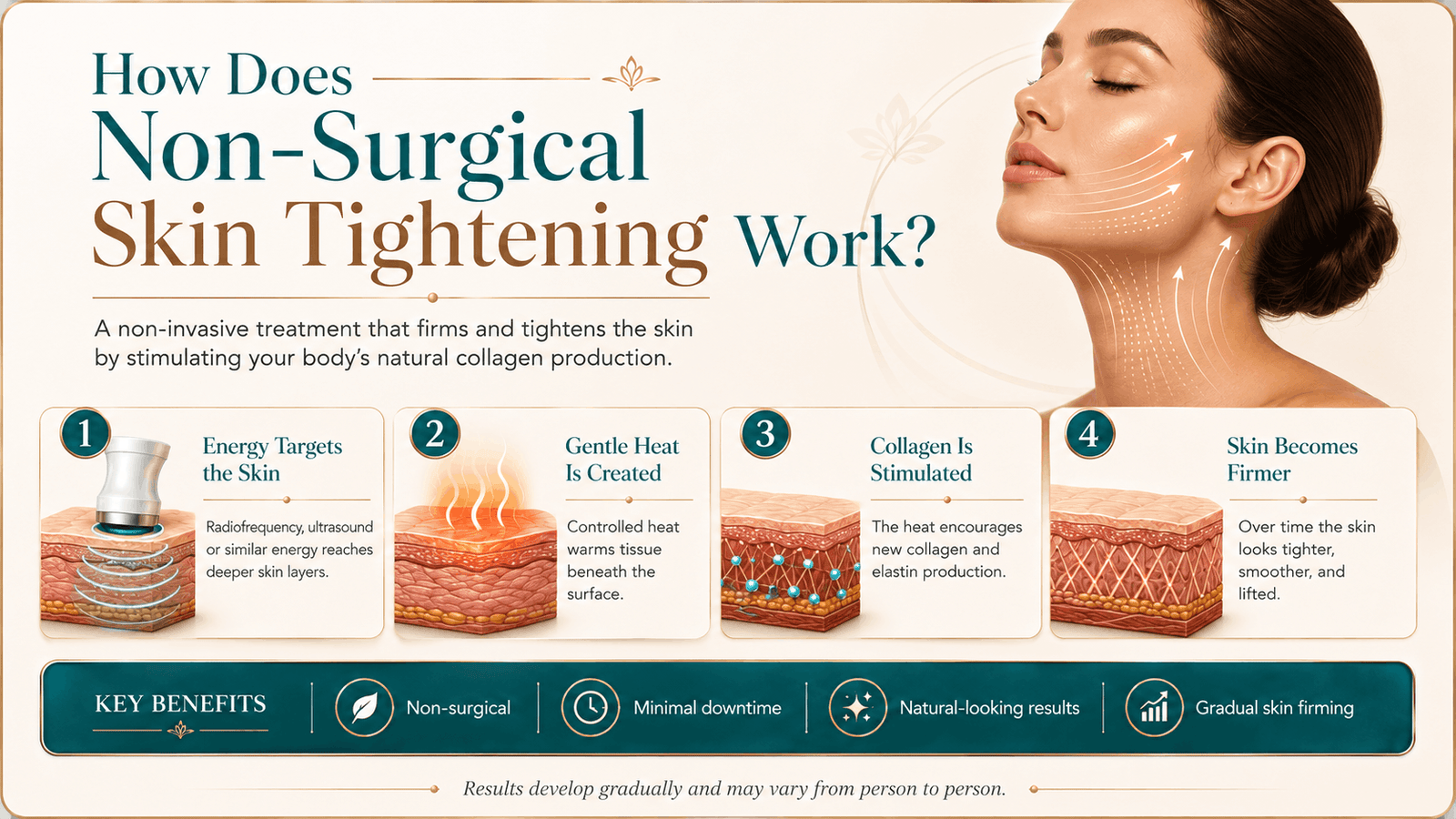
Most Non-Surgical Skin Tightening treatments rely on controlled thermal energy to heat the deeper layers of the skin. This controlled heat causes existing collagen fibers to contract and stimulates new collagen formation over time.

Key Mechanism:

  • Heat energy targets the dermis layer
  • Collagen fibers tighten instantly
  • Natural healing response begins
  • New collagen is produced over weeks to months

This gradual improvement is why results look natural rather than sudden or artificial.

What Are the Most Common Treatment Options?

There are several technologies used in modern skin tightening procedures. Each works at different skin depths and offers unique benefits.

Radiofrequency Skin Tightening

Radiofrequency uses heat energy to stimulate collagen and improve firmness. It is one of the most widely used non-invasive treatments today.

Ultrasound-Based Treatments

Ultrasound technology targets deeper layers of the skin, making it suitable for lifting and tightening more advanced skin laxity.

Combination Approaches

Many clinics combine multiple technologies to achieve more balanced and long-lasting results, depending on individual needs.

Who is a Good Candidate For Non-Surgical Skin Tightening?

Not everyone requires the same level of treatment. Ideal candidates for Non-Surgical Skin Tightening are typically those experiencing early to moderate skin laxity.

You may be a suitable candidate if you have:

  • Mild sagging around the jawline
  • Loose skin on the cheeks or neck
  • Early signs of ageing
  • Preference for non-invasive options
  • No desire for surgical intervention

A professional consultation is essential to determine suitability and create a tailored plan.

If you are unsure whether treatment is right for you, a professional assessment can help you understand your options clearly before starting.

What Results Can You Expect?

Results from Non-Surgical Skin Tightening are gradual and continue to improve over several weeks.

Typical improvements include:

  • Firmer skin texture
  • More defined facial contours
  • Reduced the appearance of sagging
  • Subtle lifting effect
  • Improved overall skin quality

Unlike surgery, results are not immediate, but they tend to look more natural because they develop progressively.

How Long Do Results Last?

The longevity of results depends on factors such as age, lifestyle, skin condition, and maintenance treatments.

On average:

Factor

Impact on Results

Age

Younger skin maintains results longer

Sun exposure

Can reduce longevity

Skincare routine

Supports collagen maintenance

Maintenance sessions

Extend visible results

Most patients see results lasting between 6 months and 2 years, with periodic maintenance recommended for best outcomes.

Can It Replace a Facelift?

While Non-Surgical Skin Tightening can significantly improve mild to moderate laxity, it cannot fully replicate the results of a surgical facelift.

Key differences include:

  • Surgery provides immediate and dramatic lifting
  • Non-surgical treatments offer gradual improvement
  • Downtime is minimal for non-surgical options
  • Surgical results are longer-lasting

For patients not ready for surgery, non-invasive options are often a practical starting point.

Is It Safe?

Safety is one of the biggest advantages of modern skin tightening treatments. When performed by qualified practitioners, complications are rare.

Most patients experience:

  • Mild redness
  • Temporary warmth in treated areas
  • Slight swelling that resolves quickly

A trained professional ensures correct energy levels and treatment depth, reducing risks and improving outcomes.

How to Choose the Right Treatment Plan

Selecting the right approach depends on your skin condition and goals.

Here’s a simple guide:

  1. Mild laxity → Radiofrequency treatments
  2. Moderate laxity → Ultrasound-based treatments
  3. Combination concerns → Dual or combination therapies
  4. Prevention-focused care → Maintenance sessions

A personalised consultation ensures the safest and most effective approach.

How to Maintain Your Results

To maintain results from Non-Surgical Skin Tightening, consistency matters.

Helpful habits include:

  • Using SPF daily
  • Staying hydrated
  • Following a high-quality skincare routine
  • Avoiding smoking
  • Scheduling maintenance treatments when advised

These steps help preserve collagen and slow future skin ageing.

If you are ready to explore treatment options, booking a consultation is the next step. A tailored plan ensures you get safe, effective, and natural-looking results suited to your skin condition.

Final Thoughts

Non-Surgical Skin Tightening continues to evolve as one of the most effective non-invasive solutions for improving skin firmness and restoring youthful definition. While results vary from person to person, the combination of technology, expertise, and personalised care makes it a reliable option for many people seeking gradual, natural enhancement.

With the right guidance and realistic expectations, Skin Tightening can be a valuable part of a long-term skincare and anti-ageing strategy.

Frequently Asked Questions

  1. Is non-surgical skin tightening painful?

Most patients describe it as a warm sensation rather than pain. Discomfort is minimal and usually well tolerated.

  1. How many sessions are needed?

This depends on skin condition, but many people see noticeable improvement after 2–4 sessions.

  1. When will I see results?

Some tightening may be visible immediately, but full results typically develop over 6–12 weeks as collagen builds.

  1. Can younger people get skin-tightening treatments?

Yes, it is often used preventatively in people in their late 20s or 30s to slow early signs of ageing.

  1. Are the results permanent?

No, results are long-lasting but not permanent. Maintenance treatments are recommended to sustain improvements.


Tejal Sangani is a London and Brighton-based non-surgical cosmetic practitioner, prescribing pharmacist with 15 years’ experience, practicing at Sarivaa Aesthetics, Brighton’s most affordable aesthetic clinic.

4.4/5

Based on 135 reviews

Scroll to Top