
Why Clinics Are Using Imaging Tools Before Aesthetic Treatments
The use of imaging tools before aesthetic treatments is quickly becoming a standard in modern aesthetic medicine. From facial fillers and Botox to laser resurfacing and vein treatments, clinics are using advanced imaging systems to improve safety, precision, and personalised treatment planning.
Instead of relying only on visual assessment, practitioners now use facial scans, ultrasound imaging, and AI-powered skin analysis to understand a patient’s unique anatomy before treatment begins. This shift toward image-guided care helps clinics reduce risks, improve outcomes, and create more customised treatment plans.
As patient expectations continue to rise, imaging technology is helping clinics deliver more predictable and data-driven results.
What Are Imaging Tools Before Aesthetic Treatments?
Imaging tools before aesthetic treatments are technologies used to analyse the skin, facial structure, tissue layers, and blood vessels before performing cosmetic procedures.
These tools may include:
- Ultrasound imaging
- Digital skin scanners
- Facial mapping systems
- Doppler ultrasound
- AI-based skin analysis software
- 3D facial imaging systems
Many practices now operate as a facial imaging clinic, where digital analysis becomes part of the consultation process.
Clinics also use 3D face scan aesthetics technology to evaluate facial symmetry, volume loss, and skin quality more accurately before injectables or laser procedures.
Why Clinics Scan Your Face Before Fillers
One of the most searched patient questions today is: Why do clinics scan your face before fillers?
The answer is simple. Every face has a different vascular structure, tissue density, and facial balance. Facial imaging allows practitioners to understand those differences before injections are performed.
Scans help clinics:
- Identify important blood vessels
- Analyse facial proportions
- Detect asymmetry
- Determine ideal injection points
- Improve product placement accuracy
This reduces guesswork and allows treatments to be planned more safely and precisely.
Want Natural-Looking Lip Filler Results?
Book a professional consultation to explore personalised lip filler treatment options with advanced facial assessment technology.
2. Smart Devices and Wearables
Smart beauty tools can track hydration levels, UV exposure, and even sleep patterns that affect skin health. These innovations are part of growing beauty treatment technology trends.
3. Big Data and Predictive Analytics
By analysing large datasets, brands can predict future skin concerns and recommend preventive treatments. This makes data-led beauty treatments more proactive than reactive.
4. Digital Consultation Platforms
Virtual consultations allow professionals to assess skin remotely. This is a key example of how clinics use technology for skincare in modern practice.
Benefits of Data-Led Beauty Treatments
There are several clear advantages to choosing data-driven beauty treatments over traditional methods:
- Personalisation: Treatments are tailored to individual skin needs
- Accuracy: Data improves diagnosis and treatment planning
- Efficiency: Less time wasted on ineffective products
- Tracking: Progress can be measured over time
- Consistency: Results are more predictable
Research from Deloitte shows that over 60% of consumers prefer personalised experiences, highlighting the growing importance of this approach.
Ready to see what your skin really needs?
Book a professional consultation today and experience data-led beauty treatments designed specifically for your skin profile.
Popular Data-Driven Treatments Today
Clinics are already offering a wide range of advanced services based on data-driven beauty treatments:
- Customised facials based on skin scans
- Laser treatments guided by diagnostic tools
- AI-powered product recommendations
- Skin health monitoring programs
These services are often part of a data-driven aesthetic clinic, where technology plays a central role in every decision.
What Challenges Do Data-Led Beauty Treatments Face?
While the benefits are clear, there are still some challenges to consider:
- Data Privacy: Handling sensitive skin and personal data responsibly
- Cost: Advanced treatments can be expensive
- Accessibility: Not all clinics offer these technologies
- Over-reliance on Tech: Human expertise is still essential
Even with advanced tools, the role of trained professionals remains critical in interpreting data correctly.
How Are Clinics Adapting to This Shift?
Clinics are quickly evolving to keep up with this trend. Many are investing in:
- Advanced diagnostic devices
- Staff training on data interpretation
- Integrated treatment platforms
This shift reflects a broader move toward personalised beauty technology, where services are built around individual needs rather than standard packages.
Have questions about your skin or treatment options?
Get in touch with our experts today and learn how advanced beauty treatments can work for you.
- According to recent industry reports, 54% of aesthetic clinics say AI-assisted imaging has improved patient outcomes, while patient satisfaction scores in AI-guided treatments increased by nearly 30%.
What Is Facial Imaging Before Botox?
Another common question is: What is facial imaging before Botox?
Facial imaging before Botox involves capturing detailed images of muscle movement, facial expressions, and wrinkle formation patterns. This helps practitioners determine exactly where Botox should be placed for natural-looking outcomes.
Using imaging tools before aesthetic treatments, clinicians can better understand:
- Muscle activity during facial movement
- Areas causing dynamic wrinkles
- Facial balance and symmetry
- Skin texture and fine lines
This level of analysis helps avoid frozen or uneven results while improving overall precision.
Thinking About Botox Treatment?
Book a professional Botox consultation with advanced facial assessment and personalized treatment planning.
How Imaging Improves Safety During Treatments
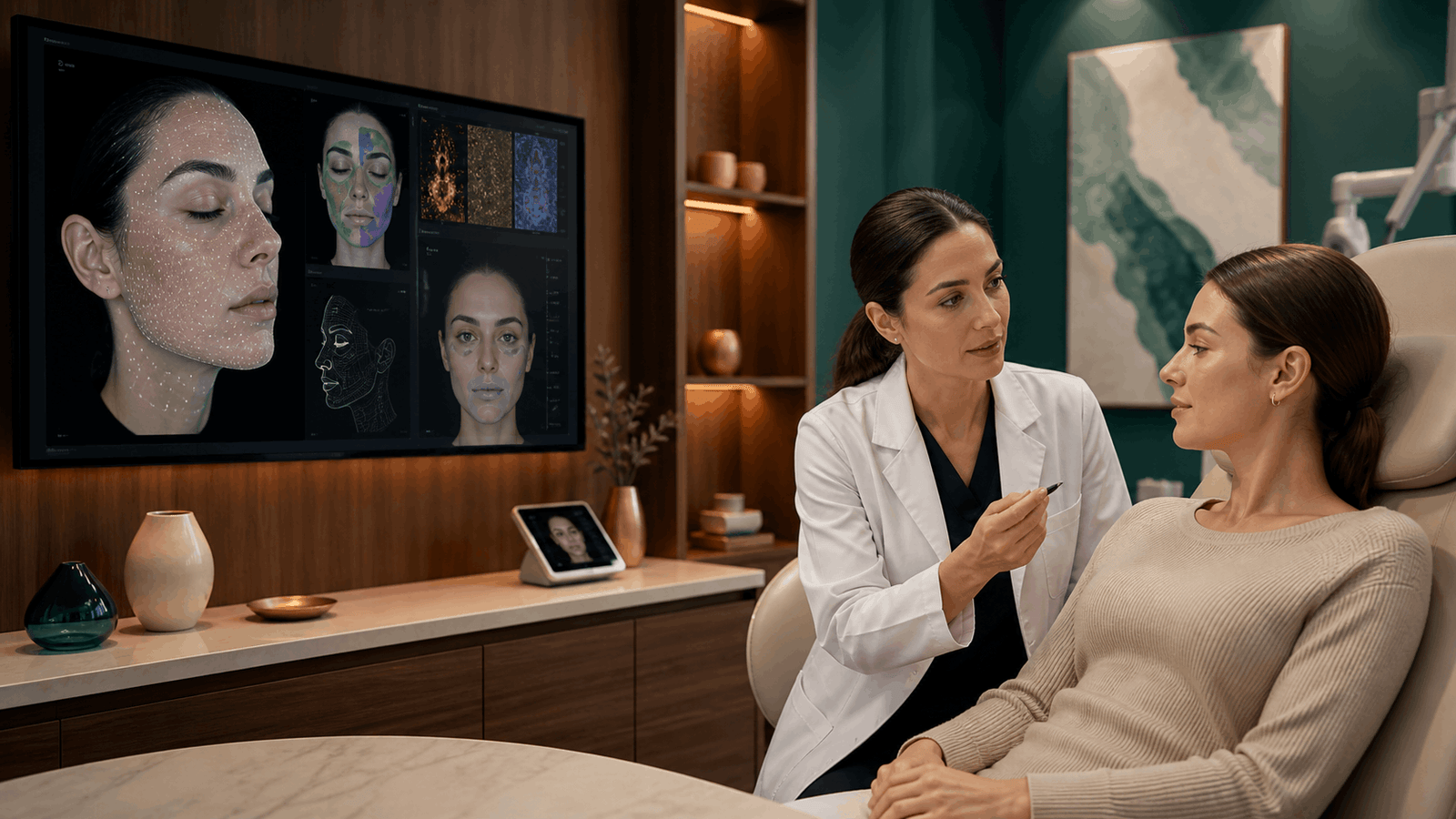
Safety is one of the biggest reasons clinics use imaging tools before aesthetic treatments.
Procedures like fillers and sclerotherapy involve delicate facial areas that contain arteries, veins, and nerves. Imaging technology helps practitioners avoid critical structures and lower the risk of complications.
Ultrasound imaging, for example, can help identify blood vessels hidden beneath the skin before injections are placed.
This is especially important in high-risk treatment areas such as:
- Lips
- Nose
- Under-eye area
- Temples
- Jawline
Studies published in medical journals continue to highlight the growing role of AI and imaging in improving diagnostic precision and personalised aesthetic care.
Are Skin Scanners Accurate for Treatments?
Another common question patients ask is: Are skin scanners accurate for treatments?
Modern skin analysis systems are highly advanced and can detect concerns that are not always visible during a standard consultation.
These scanners can assess:
- Sun damage
- Skin hydration
- Pigmentation
- Texture irregularities
- Fine lines
- Pore size
- Redness and inflammation
Want to Learn More About Your Skin Condition?
Explore common skin concerns, treatment options, and personalized care solutions designed to support healthier, clearer-looking skin.
Some clinics now use an AI face scanner clinic model where artificial intelligence helps analyse skin quality and aging patterns using image-based data.
While imaging tools do not replace professional medical expertise, they help practitioners make more informed decisions based on measurable information rather than assumptions alone.
How Clinics Plan Aesthetic Treatments More Precisely
Many patients also wonder: how do clinics plan aesthetic treatments with such precision today?
Modern clinics increasingly combine imaging technology with personalised consultations to create tailored treatment plans.
Imaging helps practitioners determine:
- Where volume loss is occurring
- Which treatment areas need attention
- How deep should the injections be placed
- Which laser settings are safest for the skin type
- How treatments should progress over multiple sessions
This allows clinics to move away from generic approaches and create treatment plans based on each patient’s facial anatomy and skin condition.
Benefits of Imaging Tools Before Treatments
The growing demand for image-guided care reflects the major benefits of imaging tools before treatments.
These benefits include:
Better Treatment Accuracy
Imaging helps practitioners target exact treatment areas and improve placement precision.
Improved Patient Safety
Scans reduce the chances of vascular complications and uneven outcomes.
Personalised Treatment Plans
Clinics can customise procedures based on facial structure, skin quality, and anatomy.
Better Patient Communication
Visual imaging helps patients better understand their concerns and recommended treatments.
More Predictable Results
Advanced imaging supports consistent and measurable treatment outcomes over time.
Want a More Personalised Treatment Plan?
Book a consultation to learn how imaging-guided aesthetic treatments can improve precision, safety, and results.
The Future of Imaging in Aesthetic Medicine
The future of aesthetic medicine is becoming increasingly data-driven.
Clinics are now integrating:
- AI-powered facial analysis
- Real-time imaging guidance
- Treatment simulation software
- Predictive skin assessment tools
- Progress tracking systems
Experts believe imaging-guided care will continue expanding as clinics focus more on personalisation, safety, and measurable outcomes.
Speak With Our Aesthetic Team
Want to learn how imaging technology can improve your treatment experience and results? Contact us today to discuss advanced imaging consultations and personalised treatment planning.
Conclusion
Imaging tools are changing modern aesthetic treatments by improving safety, accuracy, and personalised care. From fillers and Botox to laser and vein procedures, advanced facial imaging helps clinics make better treatment decisions based on individual anatomy. As technology evolves, image-guided aesthetic care is becoming a trusted standard in modern cosmetic medicine.