
What Happens During the Face Ageing Process?
The face ageing process involves gradual biological changes that influence skin quality and facial support structures.
Skin Changes
Skin is usually the first area where ageing becomes visible.
Important biological changes include:
- Reduced collagen production
- Breakdown of elastin fibres
- Slower skin cell renewal
- Decreased moisture retention
Dermatology studies show collagen production drops by approximately 1% every year after the age of 20, which contributes to wrinkles and reduced skin firmness.
Fat Redistribution
Facial fat pads provide youthful fullness and contour. As ageing progresses, these fat compartments shift or shrink.
Common changes include:
- Volume loss in the cheeks and temples
- Hollowing under the eyes
- Fat accumulation in the lower face
Muscle Activity
Facial muscles are responsible for everyday expressions such as smiling, frowning, and squinting.
Repeated movement gradually forms:
These wrinkles are sometimes referred to as dynamic wrinkles because they originate from repeated muscle activity.
Bone Structure Changes
Ageing also affects the facial skeleton. Over time, bone density and volume decrease, altering facial proportions.
This structural change may cause:
- Reduced support for the cheeks
- Changes in jawline definition
- Increased skin laxity
Bone remodelling plays a major role in shaping facial ageing patterns, although it often goes unnoticed compared with surface skin changes.
What Are the Most Common Facial Ageing Patterns?
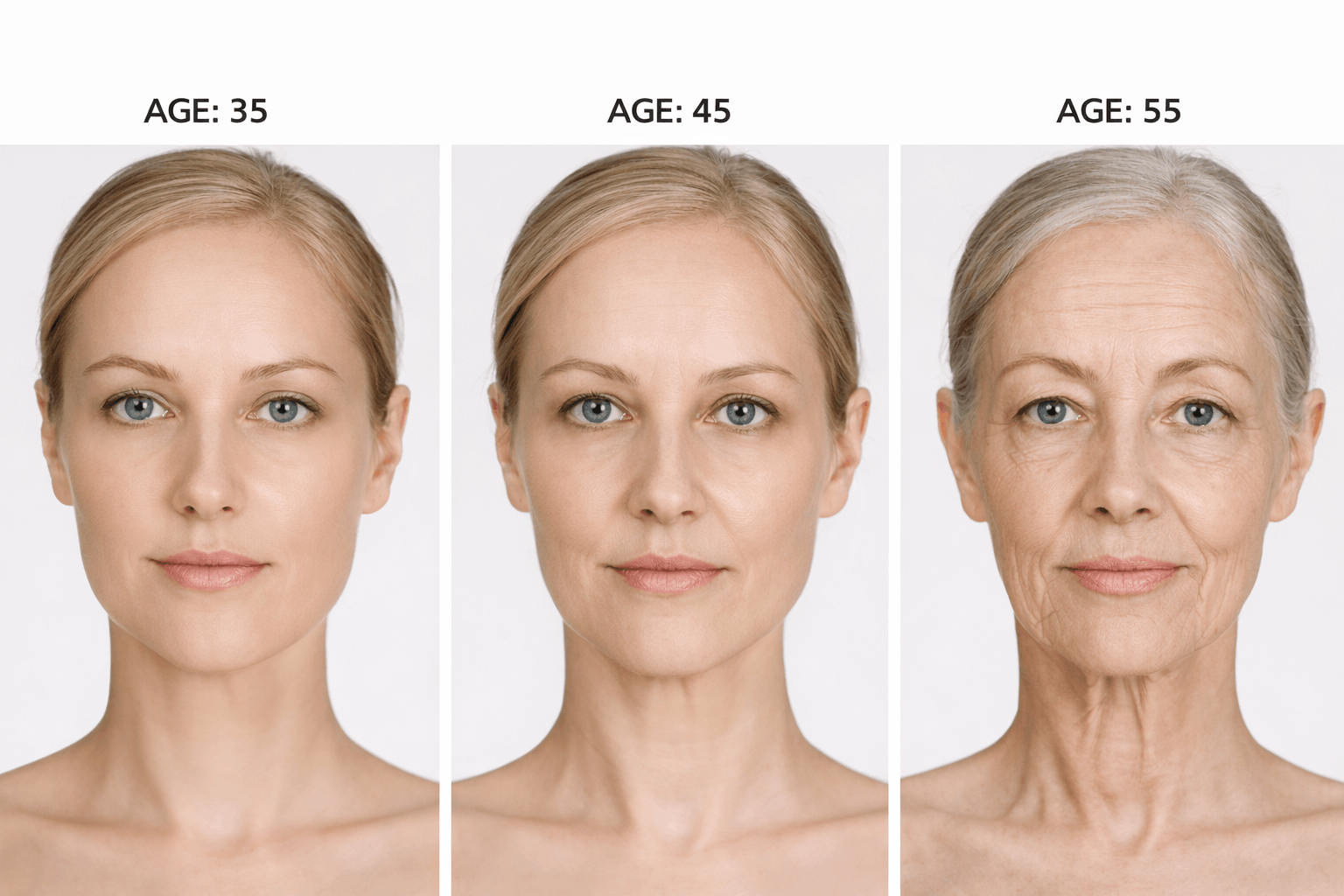
Dermatology and aesthetic medicine research suggests several typical ageing patterns observed in different individuals.
1. Wrinkled Pattern
This pattern is characterised by:
- Thin skin
- Numerous fine lines
- Early crow’s feet and lip lines
People with lighter or sun-exposed skin may experience this pattern more prominently.
2. Sagging Pattern
Sagging patterns involve gradual skin laxity rather than fine lines.
Common features include:
- Drooping cheeks
- Jowls along the jawline
- Loose skin under the chin
This pattern often appears as collagen and elastin decline.
3. Volume Loss Pattern
Some individuals primarily experience hollowing rather than wrinkles.
Typical signs include:
- Sunken temples
- Flattened cheeks
- Under-eye hollows
4. Pigmented Pattern
Changes in skin tone can also define facial ageing patterns.
Common features include:
- Age spots
- Uneven pigmentation
- Sun damage
What Factors Affect Facial Ageing?
Several biological and environmental influences act as major factors affecting facial ageing.
1. Genetics
Genetics strongly influences:
- Skin thickness
- Facial bone structure
- Natural collagen production
Family traits often explain why people age differently.
2. Lifestyle Habits
Everyday habits can accelerate visible ageing.
Important factors include:
- Long-term sun exposure
- Smoking
- Poor sleep
- Diet and hydration
Research shows smoking significantly increases wrinkle formation by reducing oxygen supply to skin cells.
3. Skincare and Sun Protection
Protective skincare habits play a major role in slowing ageing.
Essential practices include:
- Daily broad-spectrum sunscreen
- Antioxidant skincare products
- Retinoids to support collagen
- Proper hydration
Dermatology research suggests UV exposure contributes to up to 80% of visible facial ageing.
How Does Face Shape Influence Ageing?
Different face shapes tend to age differently:
- Oval faces: usually age gradually and evenly
- Round faces: often retain youthful volume longer
- Long faces: may show earlier mid-face volume loss
- Square faces: structural changes may emphasise the jawline
These structural differences influence how the face changes with age.
Skin Ageing Stages and How They Affect Your Face
What Are the Early Signs of Facial Ageing?
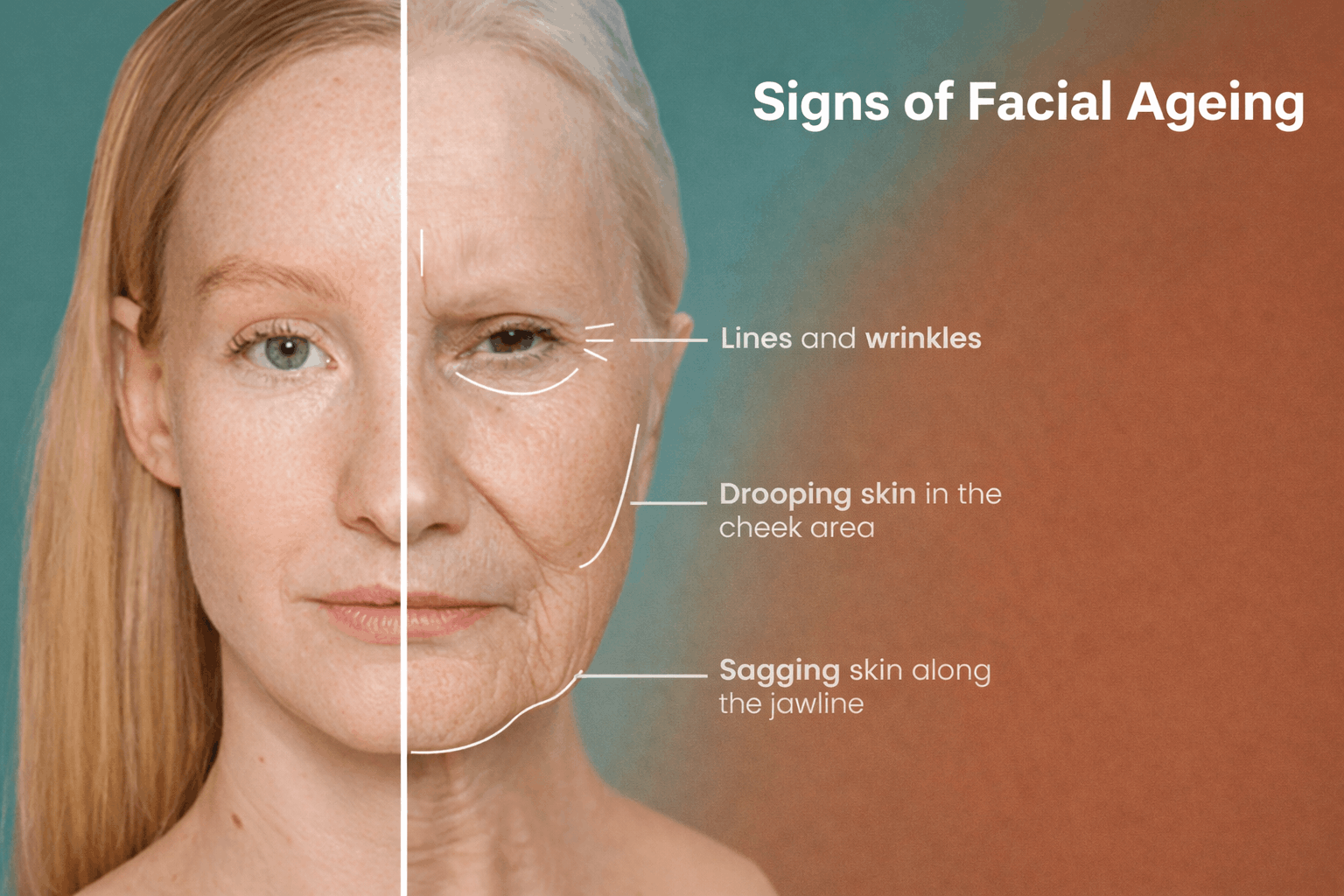
Recognising early changes helps people identify the signs of facial ageing.
Common early indicators include:
- Fine lines around the eyes
- Early forehead wrinkles
- Uneven skin tone
- Mild skin laxity
- Subtle cheek volume loss
These changes typically appear during the first skin ageing stages, which often begin in the late twenties or early thirties.