
Sculptra Treatment Brighton: Complete Guide to Results, Safety and Aftercare

What if facial rejuvenation could work gradually, without relying on an immediate change in facial volume? That is one of the key differences between Sculptra and traditional dermal fillers. Sculptra treatment Brighton uses poly-L-lactic acid (PLLA) to stimulate collagen production, so changes develop progressively over time rather than appearing fully straight after treatment.

But how many treatments are needed? When do results start to show? How long can they last, and what should you expect after treatment? This guide explains how Sculptra works, who it may suit, possible side effects, recovery, and aftercare, so you can understand the treatment before booking a consultation.

Ready to Explore Sculptra?

If you're considering Sculptra and want to understand whether it is suitable for you, book a consultation with our qualified practitioner. You can ask questions, discuss your treatment goals, and receive personalised advice before deciding to proceed.

What Is Sculptra and How Does It Work?

Sculptra is an injectable treatment containing poly-L-lactic acid (PLLA). It works differently from traditional dermal fillers. Instead of providing an immediate change in facial volume, Sculptra helps stimulate collagen production over time.

Collagen is a protein that helps support the skin’s structure. As we age, natural collagen production decreases, which can contribute to changes in skin firmness, volume, and facial contours.

Sculptra is gradually processed by the body while collagen develops around the treated areas. This means results usually develop progressively rather than appearing immediately after treatment.

For more information about the treatment ingredient and how Sculptra works, you can also refer to the manufacturer’s official Sculptra information.

What Are the Benefits of Sculptra?

One reason people consider Sculptra treatment Brighton is its gradual approach to facial rejuvenation. Rather than creating a sudden change, the treatment is designed to support collagen production over time.

Potential benefits can include:

  • Gradual improvement in facial volume
  • Support for skin structure
  • A more refreshed appearance
  • Results that develop over time
  • A subtle approach to facial rejuvenation

The exact outcome depends on factors such as your age, skin condition, treatment area, and individual response to treatment. A consultation with a qualified practitioner is important before deciding if Sculptra is appropriate for you.

How Many Sculptra Treatments Do You Need?

There is no single treatment schedule that works for everyone. The number of Sculptra sessions depends on your individual needs and the areas being treated.

Some people may require a course of treatments rather than one appointment. Your practitioner can assess your facial structure, skin, and treatment goals before recommending a suitable plan.

It is also important not to judge your final result immediately after the first session. Sculptra works gradually, so your practitioner may recommend allowing time for the treatment to develop before deciding whether further sessions are needed.

How Long Does Sculptra Take to Show Results?

Sculptra does not usually provide its full result straight away.

You may notice some initial changes after treatment, but these can partly relate to temporary swelling or the treatment process itself. The longer-term effect develops as your body produces new collagen.

This gradual process means you may notice changes over the following weeks and months rather than seeing the final result on the day of your appointment.

Your practitioner can explain what changes you may expect based on the treatment area and your individual plan.

Ready to Book Your Treatment?

If you have already decided that Sculptra is right for you, you can arrange your appointment with our clinic.

How Long Does Sculptra Last?

One of the most common questions about Sculptra is how long the results can last.

The duration varies from person to person. Factors such as age, lifestyle, skin condition, collagen production, and the number of treatments can affect how long results remain noticeable.

Sculptra is designed to stimulate collagen rather than provide a permanent change. Your practitioner can discuss maintenance treatments if they are appropriate for you.

What Are the Side Effects of Sculptra?

As with any injectable cosmetic treatment, Sculptra can cause temporary side effects.

Common reactions may include:

  • Redness
  • Swelling
  • Tenderness
  • Bruising
  • Discomfort
  • Small areas of swelling around injection sites

These effects are generally temporary, but individual experiences can vary.

There can also be less common or more serious complications with injectable treatments. This is why choosing a properly qualified practitioner and following their aftercare instructions is important.

The FDA’s information on Sculptra provides further information about the product, its approved use, and potential risks.

What Should You Avoid After Sculptra?
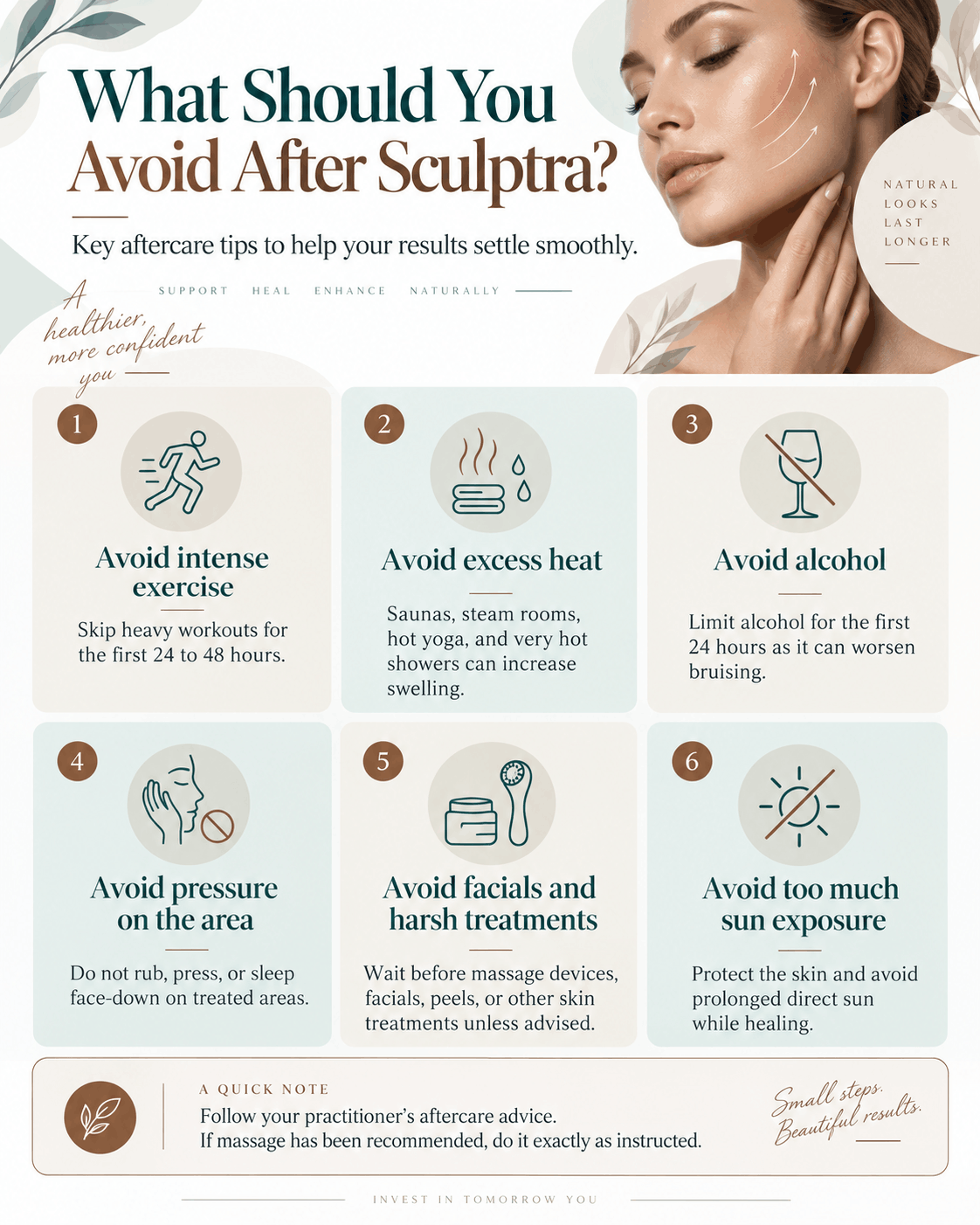
After Sculptra, following your practitioner’s aftercare advice can help support a comfortable recovery. Depending on your treatment, you may be advised to:

  • Avoid activities that may increase heat, irritation, or swelling for a short period.
  • Follow any massage instructions provided by your practitioner.
  • Use skincare products only as recommended after treatment.
  • Avoid making major changes to your usual skincare routine without professional advice.
  • Follow the specific aftercare guidance given for the areas treated.
  • Contact your practitioner if you experience unexpected or persistent symptoms after treatment.

Who Is a Good Candidate for Sculptra Treatment Brighton?

A suitable candidate is generally someone who wants gradual facial rejuvenation and understands that Sculptra develops its effects over time.

During a consultation, your practitioner may consider:

  • Your overall health
  • Your skin condition
  • Previous aesthetic treatments
  • Areas you want to treat
  • Your expectations
  • Any medicines or relevant medical history

Sculptra may not be suitable for everyone. Pregnancy, breastfeeding, certain allergies, active skin problems, or other medical factors may affect whether treatment is appropriate.

A proper consultation should always take place before treatment.

Have Questions About Sculptra?

Speak directly with our team about the treatment, availability, pricing, or any questions you may have before booking.

Is Sculptra Safe?

Sculptra has been used as an injectable aesthetic treatment for many years, but no cosmetic procedure is completely risk-free.

Safety depends on several factors, including appropriate patient selection, correct injection technique, product handling, and aftercare.

For this reason, Sculptra treatment Brighton should only be considered with a qualified and experienced practitioner who can assess your suitability and explain the possible benefits and risks.

Sculptra vs Dermal Fillers: What Is the Difference?

Sculptra and dermal fillers are both injectable aesthetic treatments, but they work differently.

Aspect

Sculptra

Dermal Fillers

How it works

Stimulates collagen production

Adds volume using a gel-like filler

Results

Develop gradually

Usually visible soon after treatment

Main purpose

Supports gradual facial rejuvenation

Adds or restores volume in specific areas

Treatment approach

Progressive

More immediate

Best suited to

People looking for gradual changes

People seeking targeted volume or contouring

Neither treatment is automatically right for everyone. The best option depends on the area being treated, your facial structure, and the result you want to achieve.

What Happens During Sculptra Treatment?

Before treatment, your practitioner should discuss your concerns, assess the treatment area, and explain what you can realistically expect.

The treatment involves injections into selected areas of the face. The number and location of injections depend on your individual treatment plan.

After your appointment, you will receive aftercare guidance. Because results develop gradually, follow-up appointments may also be recommended.

If you are considering Sculptra treatment Brighton, starting with a consultation allows you to ask questions about suitability, treatment areas, expected results, recovery, and cost.

Conclusion

Sculptra offers a gradual approach to facial rejuvenation by supporting your body’s natural collagen production. Understanding the treatment process, expected results, possible side effects, aftercare, and suitability can help you decide if Sculptra treatment Brighton is right for you. A consultation allows your practitioner to discuss your individual needs and expectations.

Frequently Asked Questions

Does Sculptra give immediate results?

No. Sculptra is designed to stimulate collagen, so results develop gradually rather than appearing fully immediately.

How many Sculptra sessions will I need?

The number of sessions varies according to individual needs, treatment areas, and your practitioner’s assessment.

Can Sculptra be used with other treatments?

It may be possible to combine Sculptra with other aesthetic treatments, but this should be discussed with a qualified practitioner.

How long is Sculptra recovery?

Most people can expect some temporary redness, swelling, tenderness, or bruising. Your practitioner will explain the expected recovery period and aftercare.

Is Sculptra suitable for everyone?

No. Suitability depends on your health, skin, treatment goals, and other individual factors. A consultation is needed before treatment.

Scroll to Top