
Polynucleotides vs Profhilo: A Complete Comparison Guide 2026

If you’re comparing Polynucleotides vs Profhilo, you’re not alone. Both treatments are widely used to improve skin quality, reduce visible signs of ageing, and support healthier-looking skin. While they share similar goals, they work in different ways and are designed to address different skin concerns.

Understanding these differences can help you make a more informed decision before booking a consultation. In this guide, we’ll explain how each treatment works, their benefits, who they may be suitable for, and whether one is better than the other.

What Are Polynucleotides?

A polynucleotide treatment is an injectable skin rejuvenation treatment that uses highly purified DNA fragments to encourage the skin’s natural repair process. Instead of simply hydrating the skin, polynucleotides work at a cellular level by stimulating fibroblasts, the cells responsible for producing collagen and elastin.

As collagen production improves, the skin gradually becomes firmer, smoother, and more resilient.

Polynucleotide treatments are commonly recommended for:

  • Fine lines and wrinkles
  • Sun-damaged skin
  • Acne scars
  • Under-eye rejuvenation
  • Crepey skin
  • Neck and dĂ©colletage rejuvenation

Results develop gradually as the skin repairs itself naturally, making this treatment ideal for people looking to improve overall skin quality rather than achieve immediate volume.

What Is Profhilo?

Profhilo skin treatment is an injectable treatment made with a high concentration of stabilised hyaluronic acid. Unlike dermal fillers, Profhilo is not designed to reshape facial features or add volume. Instead, it spreads beneath the skin to improve hydration while stimulating collagen and elastin production.

The treatment is often chosen by people experiencing:

  • Dry skin
  • Mild skin laxity
  • Dull complexion
  • Fine lines
  • Loss of firmness

Profhilo works by improving overall skin quality, leaving the skin looking smoother, fresher, and better hydrated.

Polynucleotides vs Profhilo: Side-by-Side Comparison

Although both treatments improve skin quality, they achieve results differently.

Feature

Polynucleotides

Profhilo

Main ingredient

Purified polynucleotides (DNA fragments)

Stabilised hyaluronic acid

Primary purpose

Skin regeneration and repair

Deep skin hydration and remodelling

How it works

Stimulates fibroblasts to support collagen and elastin production

Hydrates the skin while stimulating collagen and elastin

Best suited for

Ageing skin, acne scars, under-eye concerns, sun damage

Dehydrated skin, dullness, mild skin laxity

Treatment focus

Repairing skin quality over time

Improving hydration and skin firmness

Can stimulate collagen?

Yes

Yes

Typical treatment areas

Face, neck, décolletage, hands, under-eye area

Face, neck, décolletage and hands

Downtime

Minimal

Minimal

Treatment approach

Supports long-term skin regeneration

Improves hydration and skin quality

Which Treatment Is Better for Your Skin Concerns?

When discussing Polynucleotides vs Profhilo, there isn’t a universal winner. The best treatment depends on your skin condition and your desired outcome.

Fine Lines and Wrinkles

Both treatments can improve the appearance of fine lines by encouraging collagen production. Polynucleotides focus on repairing the skin, while Profhilo improves hydration and elasticity.

Dry or Dehydrated Skin

If your skin feels tight, dull, or dehydrated, Profhilo may be recommended because hyaluronic acid naturally attracts and retains moisture.

Under-Eye Rejuvenation

The delicate under-eye area often benefits from polynucleotide treatment because it supports tissue repair without adding unwanted volume.

Acne Scars and Skin Damage

Polynucleotides are frequently chosen for patients looking to improve skin texture affected by acne scars or environmental damage.

The right treatment should always be recommended after a professional skin assessment rather than based solely on age or trends.

Book Your Appointment Today

Ready to refresh your skin? Book your consultation today at Sarivaa Aesthetics and let our experienced practitioners recommend the treatment that's right for you.

Can You Combine Polynucleotides and Profhilo?

Yes. Since the treatments work differently, they may complement one another as part of a personalised treatment plan.

Profhilo improves hydration and skin firmness, while polynucleotides focus on skin regeneration and repair.

Some patients benefit from combining both treatments at different stages of their skin journey. However, this should only be recommended after a consultation with a qualified practitioner who understands your skin concerns and medical history.

What Happens During Treatment?

The treatment process begins with a detailed consultation.

During your appointment, your practitioner will assess your skin, discuss your concerns, review your medical history, and recommend the most suitable treatment.

The procedure itself involves small injections into carefully selected areas using fine needles. Most appointments are completed within approximately 30 to 45 minutes.

After treatment, some patients experience temporary redness, swelling, or small injection marks, which usually settle within a few days.

Following your practitioner’s aftercare advice is important to support the healing process and achieve the best possible outcome.

Are Polynucleotides and Profhilo Safe?
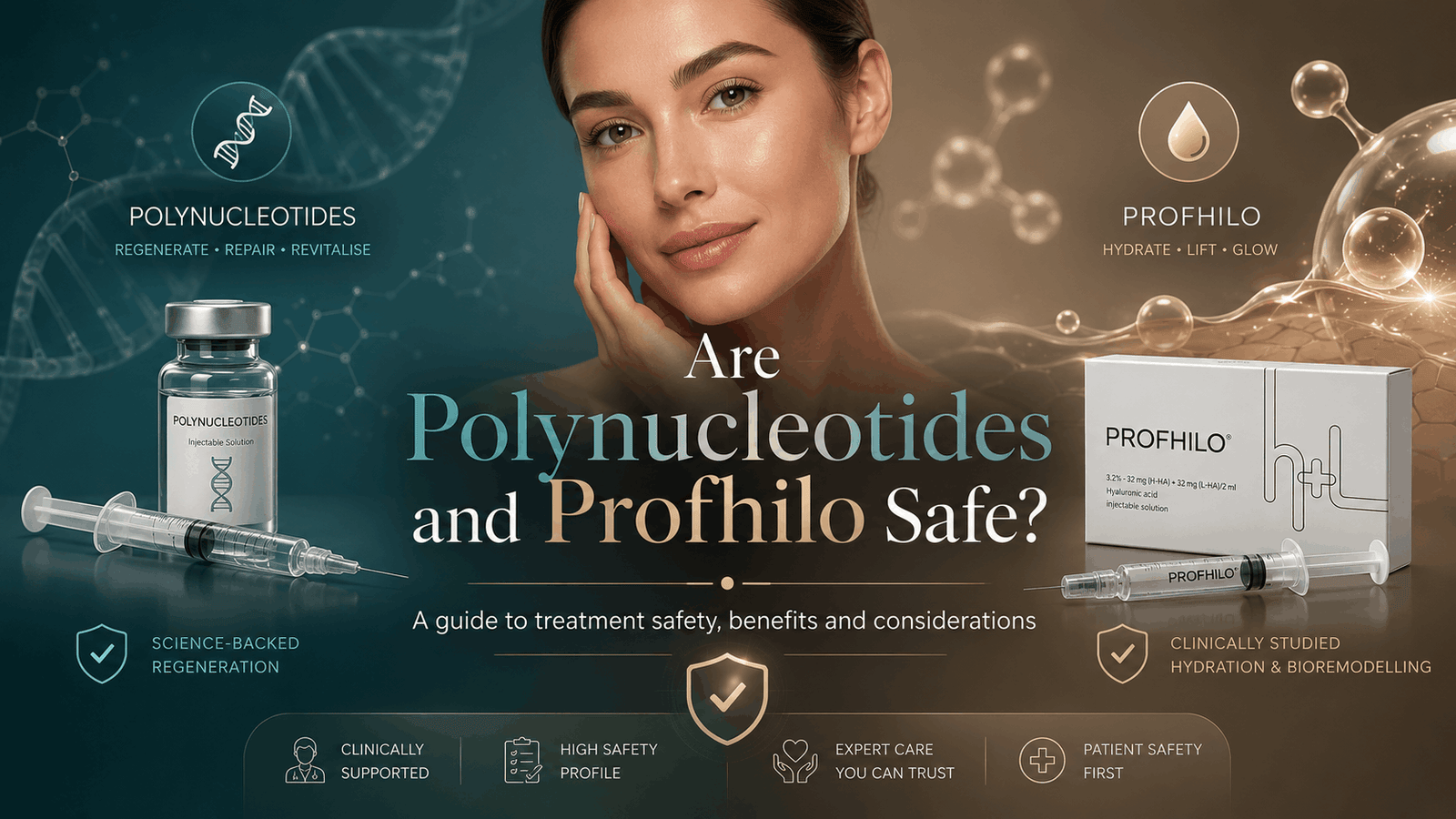
Both treatments are widely used in aesthetic medicine when performed by appropriately qualified professionals using genuine products.

Like any injectable procedure, there are potential risks, including temporary redness, bruising, tenderness, and swelling.

The NHS recommends choosing a qualified practitioner who can explain both the benefits and potential risks before any cosmetic procedure. 

How to Choose Between Polynucleotides and Profhilo

If you’re still unsure about Polynucleotides vs Profhilo, consider what you want to improve.

You may be more suitable for polynucleotides if your priority is:

  • Improving skin quality
  • Supporting natural skin repair
  • Reducing acne scars
  • Refreshing the under-eye area

Profhilo may be more appropriate if your goal is:

  • Deep hydration
  • Brighter-looking skin
  • Improved skin firmness
  • A refreshed appearance without adding volume

A consultation allows your practitioner to recommend the treatment that best matches your skin condition rather than following a one-size-fits-all approach.

Why Choosing an Experienced Clinic Matters

Injectable treatments should never be selected based on social media trends alone.

At Sarivaa Aesthetics, every treatment begins with a detailed consultation to understand your skin concerns, medical history, and aesthetic goals. This personalised approach helps ensure that every recommendation is based on clinical assessment rather than assumptions.

According to the International Society of Aesthetic Plastic Surgery (ISAPS), millions of non-surgical aesthetic procedures are performed each year globally, reflecting the growing demand for treatments that improve skin quality while maintaining natural-looking results. Choosing a qualified practitioner helps maximise safety and treatment outcomes.

Not sure whether Polynucleotides or Profhilo is the right option for your skin?

Our experienced practitioners at Sarivaa Aesthetics provide personalised consultations to assess your skin and recommend the most appropriate treatment based on your individual needs.

Conclusion

Understanding Polynucleotides vs Profhilo can help you choose the treatment that best supports your skin goals. While both improve skin quality and stimulate collagen production, they work in different ways. Polynucleotides focus on regenerating and repairing the skin, whereas Profhilo delivers intense hydration while improving elasticity and firmness.

Rather than asking which treatment is better, the more important question is which treatment is better for your skin. A professional consultation ensures your treatment plan is based on your skin condition, concerns, and long-term goals, helping you achieve natural-looking, healthy results.

Tejal Sangani is a London and Brighton-based non-surgical cosmetic practitioner, prescribing pharmacist with 15 years’ experience, practicing at Sarivaa Aesthetics, Brighton’s most affordable aesthetic clinic.

4.4/5

Based on 135 reviews

Scroll to Top